Mission: A strongly felt aim, ambition, or calling.
Our mission is the Alaska wilderness.
We have a mission in life; a clear set of goals in mind. Our goal from this past month was to complete expedition style hunting in Alaska and atempt to harvest the big five Alaskan animals. This task is easier said than done considering the expedition was non-guided and on public land, making the chances of success solely dependent upon ourselves.
The development of our mission began years ago in college classrooms, scribbling big Alaskan ideas on spiral ring binders at Penn State University. These ideas became www.missionak.com. Jon, August, and I started filming our Alaskan adventures the months following our brightest Penn State idea. The idea was FULL RUT hunting, with the notion that this new show would overtake the most popular hunting shows on TV. Come to find out, filming and attempting to place this show on air would be harder than any of us had thought. Heading to the world’s largest outdoorsmen shows to share our idea with company “big wigs” turned out to be a daunting and burdensome task.
Against all odds we set out to shake the foundation of the outdoor television world. The adventures that followed us tracked our successes and failures on the road to what some have called the “mission impossible,” which we like to call “Mission Alaska.”
The mission began by meticulously mapping out our hunting game plan, combing over Alaskan topographic maps and the Alaska hunting regulations. Reading and memorizing the Alaska hunting regulations through the states website http://www.adfg.alaska.gov/index.cfm?adfg=home.main, would prove to be more than crucial. Planning for hunts is a must; every detail of the hunting game plan must be analyzed. The hunting game plan arises many questions… w ho in my family can participate in this hunting season? What type of transportation will we use on the trail systems? What animals should we hunt? Where should we go? How do we get there? What is our hunting strategy? What are the biological factors playing into the population of animals we are attempting to harvest? Should we apply for permits? How do we make ourselves 100% legal? Can we do this hunt plan safely? What is our A, B, C, and Z back-up plans, plan Z meaning all plans have failed so how do we save our lives??? Answering each of these individual questions for each of the hunts over the month long expedition would involve more planning than any of us had initially thought.
After months of planning and years of dreaming, the expedition hunt plan began to evolve. The first hunt would target barren ground caribou in the oil fields of Alaska, north to Ice Road Truckers territory driving a truck then using river-rafting equipment. The second hunt would take us to the Talkeetna and Chugiak Mountains to attempt a dangerous Dall sheep hunt on Mountain bicycles. The third part of the expedition would involve the attempt to fill a MTN goat tag in the Kenai Peninsula, a tag that I drew in the Alaska hunting permit system. The fourth and fifth combo hunt would involve my entire family, a moose and black bear hunt in the Kenai Peninsula Mountains.
Caribou hunt
Lets start our month long hunting plan with the first available species to harvest in Alaska for the fall season opener. I should say summer opener, however August 1st in Alaska means fall has already started to descend upon the green leaves turning the landscape transcendentally. Caribou are creatures of the migratory nature and begin their migration routes North to South West moving toward their post calving ground en route to their safer winter-feeding mountain refuge. Focusing on Barren Ground caribou in the Arctic Slope, we targeted the Porcupine herd in the Alaska National Wildlife Refugee or better known as ANWR in popular media.
Next step was to figure out how we could legally hunt this area, 400 miles of “wilderness road” that parallels the Alyeska oil Pipeline. There would be caribou everywhere lining this wilderness road, however you are only legally able to hunt these animals with a bow and arrow. There is a 5 miles corridor on either side of this road that allows bow hunting only, as rifle hunting is too dangerous next to such a significant source of revenue (the oil pipeline). Our game plan was to hunt for 2 days with the bows inside the 5-mile corridor; this would give us information on the movements of the caribou migration south. Once we found significant numbers on the road and after a few blown stalks, we decided to head the 5 miles off the road to use rifles. This task of 5 miles is more hardcore than anyone can really imagine, this death march made me feel like a toddler walking on a trampoline. Difficult, and if you are out of shape do not even think about attempting to harvest a beast 5 miles off the road.

Hard work pays off
We fancied ourselves somewhat extremely in shape and decided to head the 5 miles off the road, we ended up GPS’ing our location and found ourselves 8 miles off the road from the caribou kill site. We got to the legal location outside the 5-mile corridor and within three days made quick work of harvesting three bull caribou. The grand finale of this hunt would be outlined by the pack out back to the truck, the death march. We took advantage of a river raft and floated across the Sag River, this helped us a mile or two, however most of the miles were covered on foot rather than by boat. Packing out three caribou in one trip from kill site to boat, one bou on each of our backs including our filming equipment and camping equipment turned out to be more than hard core. We made the task of 8 miles happen in less than 12 hours, and packed through the night, as we were too tired to pull out sleeping equipment and rest. We didn’t have time for rest as we needed to head on to the next step of the expedition, driving south 1000+ miles to the Talkeetna and Chugiak Mountain ranges for big Dall sheep rams.
Sheep hunt
Driving south after the caribou pack out, Auggie, Jon and I seemed to have fallen into a hypnotized state, mostly from fatigue both mentally and physically. Each of us took turns driving South, Auggie was first up on the driving wheel and after about 5 hours of silence we ran into a man from France (outlined in the article below HITCHHIKING AK). Auggie decided we better pick this guy up, after all the man could have been in a survival situation and needed our help. He turned out to be an Acrobat artist from France and the only help he needed was some company after he had been in the Brookes Range Mountains in seven days of solitude. Company was not the only thing on his mind, providing a conversation wouldn’t be enough for any of our appetites. We all agreed to stop at Coldfoot, the last sign of “civilization”. At Coldfoot they have a delicious buffet of various foods that simply cannot be passed up on your route to or from Prudhoe Bay. The Frenchmen, and ourselves gorged on T-bone steak, ahi tuna, potatoes augratin, dinner roles, a little salad, and all the cookies we could stuff into our mouths and pockets. After the meal we all piled into the truck and continued south to Fairbanks, we dropped our new friend off at a popular campsite and bid farewell. We told him we had big Dall sheep rams on our minds, and we had to keep trucking south to the Chugiak’s and Talkeetna Mountains.
The gentlemen from France has a website you should check out, total acrobatic genius.
After stopping briefly to drop off the caribou meat and Auggie in Palmer Alaska to process that meat, Jon and I would pick up Bryan Peters the additional videographer. After picking up Bryan, we began to explain the hunting plan to him, and how he would be involved. The plan was as follows, Auggie would stay in Palmer and process the caribou meat, driving separately to meet us two days later on top of the Mountain. As this is a secret family sheep spot, Auggie and I would know exactly where to meet on opening morning of the 2011 sheep season.
The hunt plan for the Dall sheep would involve mountain biking from our truck to two separate creek drainages, attacking the Mountains in two teams. My team would be Jon, Bryan and myself. Auggie was the sole man, solo team. Jon and I would film on top of one Mountain peak, and Auggie and Bryan (after meeting up) would hunt on the same mountain but a different peak. The hunt plan went smoothly, Jon, Bryan and myself biked to the base of the mountain two days prior to the season and ascended the mountain to meet Auggie.
The most exciting part of this hunt happened half way into our mountain bike journey towards our selected creek drainage. The mountain bikes provided us a stealthy entrance into a our hunting location. The silenty bikes allowed us to move down the trail swiftly and deadly. We moved down the trail in the easiest gears possible and slowly but surely made progress down the popular ATV trail. I paused for a moment to look over my shoulder, checking to make sure Bryan and Jon were still behind me. As I took that moment to stop my bike and look around, I noticed a very large black wolf standing in the middle of the trail staring directly at us in bewilderment. He would pause long enough for me to shoulder my rifle and place the cross hairs directly on his chest. I didn’t shoot as I was waiting for the cameras to be on and in place. While waiting for the cameras to turn on and start recording, I began to think about all the hunting regulations I had memorized for each game unit I would be in. Since the day was August 8 2011, I remembered wolf season does not open up until the same day sheep season would open which was not until August 10, 2011.
I decided not to shoot, for one because I could be fined drastically and prosecuted fully by the Alaska Department of Fish and Game, and for two the wolf wised up and ran off before the cameras could catch a glimpse of him. Make no mistake, while hunting in Alaska you must play by the rules, exactly by the rules. The Alaska department of Fish and Game, along with wildlife state troopers control much of the landmass in Alaska. Not much goes unnoticed to them as they control most of the ground and all of the skies with a military-like force of equipment and manpower. Also any illegal or questionable kills run the risk of being noticed by other Alaskan hunters, many of which will be more than glad to share that information with the wildlife troopers. Bottom line, play by the rules in Alaska or you will be prosecuted.
The wolf ran off, we decided that was a good thing. I took note that there were wolves in the area and more could appear on the opening day August 10th. Keep in mind, I’m an Alaskan resident and receive many of my animal tags for free from the state. If an animal appeared that I had a tag for, I would attempt to harvest it. In my pocket I had tags for Dall sheep, black bear and grizzly bear. Alaska residents pay 25 dollars for grizzly tags only, as the money directly funds the ongoing research projects of this species through the department of fish and game biologists. Imagine that, hunters actually providing the funding for conservation through tag and license purchases. That money ensures the healthy population of grizzly bears in Alaska, keeping the last frontier a truly wild place.
No wolf, no biggie. I decided to keep my rifle on my chest because it would take me too long to unload the gun from my huge hunting pack. The decision to keep my rifle on my chest versus on my backpack proved to be the smartest decision I had made the entire trip. Many may think having your rifle on your chest, with a 70 pound hunting pack on, while riding a bike may be dangerous. Two large brown humps appeared about one mile after the wolf encounter, appearing in the same manor as the wolf. I told Bryan and Jon to stop their bikes immediately; we dismounted our bikes and shouldered the rifle and cameras. The brownish blondish looking blobs were sprinting down the ATV trail, appearing then disappearing on the rolling muddy knobs. They closed the distance of about 150 yards down to 20 yards in seconds, moving faster than an Olympic sprinter. Dismounting the bikes and shouldering my rifle, I barley had enough time to stop Jon and Bryan before the bears were directly on top of us. If I had kept my rifle in my pack, I may not have been able to protect myself and the crew from the inevitable grizzly bear charge. Good thing the wolf encounter taught me to keep my rifle out and at the ready.
I had a grizzly bear tag and this was an area that I was 100% legal to harvest a grizzly bear in, as grizzlies were in season. I began thinking this is it, this is going to be my first grizzly harvest of all time, a feat that has been looming over me my entire Alaskan life. Simultaneously, I was also thinking and praying in my head “ lord make me fast and accurate” as were both cameramen Jon and Bryan. I was ready to harvest one of these bears, both of them in my cross hairs as I snapped judged the bears for the larger of the two. As both bears paused at 20 yards, they began to judge us if they could make a meal out of us an easy prey. We sat nose to nose for several seconds, anticipation for the rifle “kaboom” at a max climax for both cameramen, as they have no means of protection besides a glass lens. A classic Alaskan stand off had unfolded, a moment of minimal margin for error. As both bears were large, one around 7.5-8ft squared and the other about 6ft squared, I figured them to be a mating sow and boar. However, my better judgment told me something completely different. Boars and Sows do not hunt together very often if ever, and this was more likely a large sow with an adolescent offspring. As shooting a sow, or a sow with a cub is illegal in the state of Alaska I decided to scare the bear off versus take either of their lives. That experience was very surreal, and made all of us realize that in Alaska you are part of the food chain and at any moment can become part of the carbon life cycle. We needed to keep moving; back to our sheep hunt and we would leave the grizzlies to grow. Hopefully Auggie wouldn’t have a run in with these curious bears, as he was following our mountain bike path to our meeting location.
Jon, Bryan and I made camp that night, and ascended the mountain the next morning to begin the sheep opener.
Auggie, finished processing the caribou meat and followed our tracks South to our family ram hunting location. We rendezvoused a top the mountain, after hunting all opening day separately only to find the results. We hiked the top of the whole mountain looking for each other while simultaneously hunting for Dall sheep as we both had Ram tags to fill. At the end of opening day when it seemed that the skies had opened up for us after snowing on us earlier, the sheep started to appear. More and more sheep started to appear until several groups of ewes and lambs became an army of 70+. After glassing for what appeared to be hours, several rams were spotted below the army of sheep on a cliff edge. After spotting the rams, I also spotted what looked like a small grizzly bear or big black bear feeding above the rams several hundred yards.

Beautiful fall sunset
With no sign of Auggie, we decided to get closer to the Rams and bear to see if any the quarry would be legal. In order for a Dall sheep ram to be of legal size, the ram’s horn must curl in a full 360-degree circle in parallel line with the base to the tip of the horn. A legal bear would be a sole bear, bearing no cubs. After a 1.5 mile hike across the ridge line toward the rams that were now feeding, I would be able to sit and judge these creatures horns and if they were “full curl” trophies or 4 years old growers. The bear materialized in front of us and we began glassing this bachelor group of rams that seemed young with only one potential candidate for harvest. The bear wasn’t a bear at all; it would be an Auggie with the largest hunting backpack that I have ever seen. We were excited to see each other and finally meet on the weaning hours of daylights of the season opener. Both of us had hunted the entire mountain to find the only group of Rams simultaneously, we both had judged them and decided none of these Rams would be legal. No full curl rams on this mountaintop, the closest ram would only have a ¾ curl at best.

Ram Hunting
We would hunt the mountaintop for the next couple days to find no other groups of Rams. We decided to head back to the bottom of the mountain and our bikes to move on to the next stage of our hunting expedition. Goats would be in similar habit to the Dall sheep, so we felt prepared to conquer a new never before seen hunting location. I had drawn a mountain goat tag through the Alaska department of fish and game lottery system. Even though Auggie and I would strike out at our public land sheep location, I felt confident to fill the goat tag in a coveted hunt area in the Kenai Peninsula. After Mountain biking back to the trucks on our sheep hunt, we would drive out of the Chugiak and Talkeetna Mountains even further south toward the Kenai Mountain Range.
This hunt would be slightly different to the Dall Sheep hunt, as we would not need mountain bikes to get to our hiking location. We started the hunt directly from the road as my goat tag bordered the Seward highway toward Seward Alaska. After reading several Internet hunting forum websites during my research prior to the hunt, I pinpointed goat’s locations before leaving for the expedition. Months of research paid off as we saw many goats high atop mountain cliffs from our roadside glassing location.
http://outdoorsdirectory.com/index.php
Goat hunt
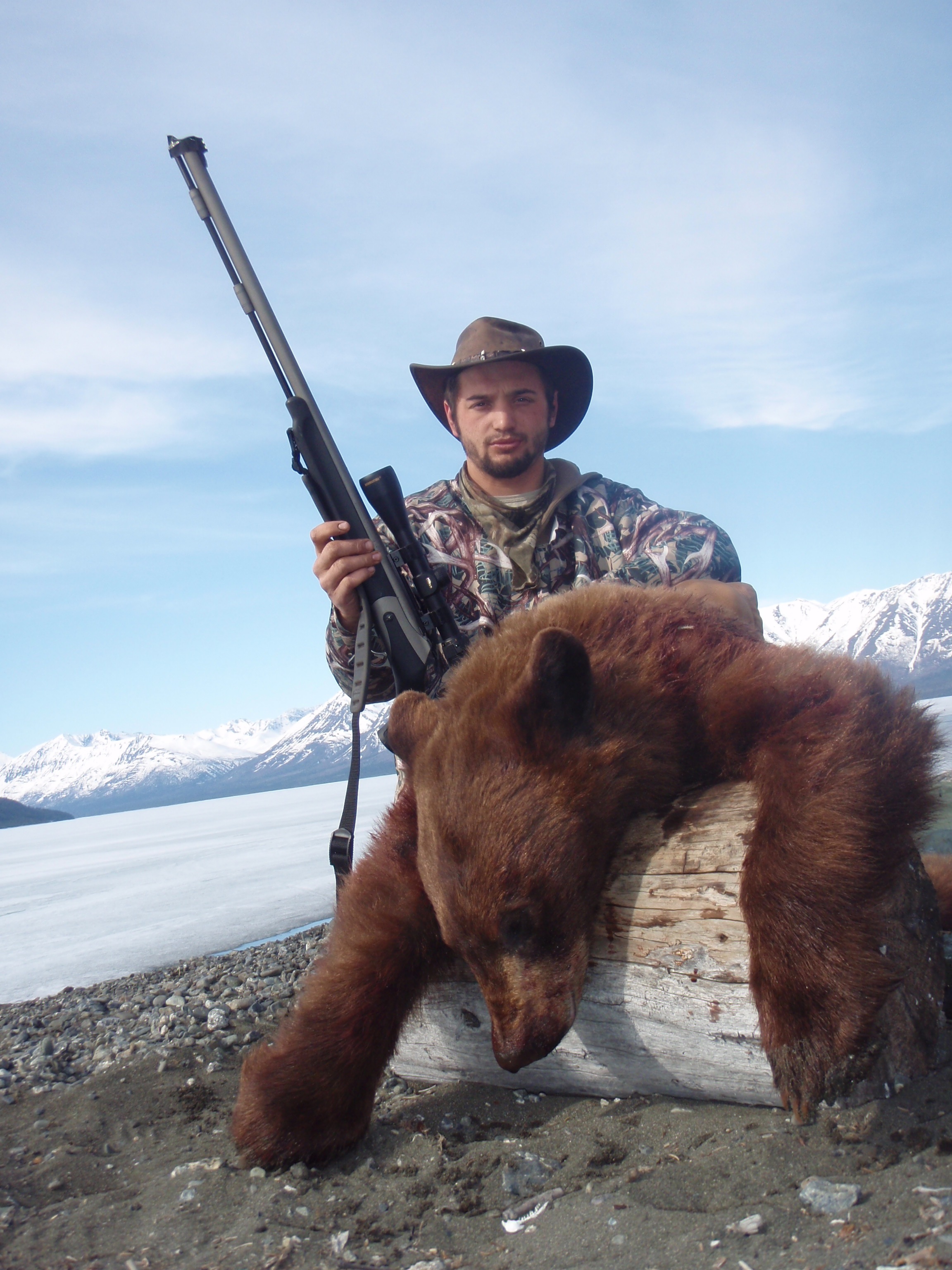
Keeping our hunting packs with the same exact gear from our sheep hunt, it took us no time to restock our food supplies and get back out immediately after the goat on the next stage of our hunt. I decided to bring a Thomson Center Muzzle loader, with 250-grain sabot bullets, Winchester primers, and pydroex black powder pellets. Bringing a muzzle loader to Alaska your must be prepared for the conditions to not only be extremely wet, but down right soaked to the bone the entiiiiiiire tiiiiiiiiiiime. The weather conditions between condensation and rain will turn you black powder to soup instantly. My number one priority would be to keep my weapon dry, and keep my ammunition and black powder if possible condensation free in a quadruple water proofing system. Several dry cloths and paper towels were placed into series of a neoprene gun casing down to several plastic waterproofing dry bags to help keep the weaponry operable. Also I decided to swab my barrel with a dry Otis system rag to pull out the last condensation prior to harvesting my goat, however I am getting ahead of myself in this story.
Jon and I, after spotting several goats from the Seward Highway studied the mountain and the best way to ascend towards the goat safe haven. Above tree line was a series of cliff outcroppings that would protect the goats from predators such as wolves and grizzly bears. These cliffs are extremely dangerous and can prove to be fatal for any type of creature, especially humans unless you’re Sylvester Stallone in popular movies such as “Cliff Hanger”. I felt like I was in a constant replay of bad scenes from that movie, however I would have a hunting pack on and look much more ridiculous than your average rock climber. But yet again, that’s were Jon and I found ourselves hiking up a seriously steep mountain, hanging on to cliffs literally for our dear lives. Taking the first step out of the truck and up the mountain, Jon and I became insta-soaked, our hands already pruned up like we had been swimming in a pool all day.
These wet conditions along with hiking up near vertical cliff faces with hunting gear on, I began to question the sanity of mountain goat hunters and myself. Even though the goats were so close to the road and our truck, they were so far. Hiking up the mountain to get above tree line and in actual goat territory was going to be much more than difficult, something like extremely deadly and dangerous. As if hiking (climbing) was not intense enough, the hunt would again take a drastic change of course. 30 minutes into the most intense hiking (rock climbing) I have ever done, a serious accident would happen. A possible hunt ending accident, with an inevitable trip to the Emergency Room that would curb the enthusiasm of our ascension to the goats.
Having soft hands from the wet conditions would prove almost fatal. As I was using the cliffs to hoist myself up the mountain, I had to check each handhold to make sure the stone was strong enough to bear my weight. As I grabbed a hay bale sized boulder protruding horizontally from the mountain, the rock broke, sliced and crushed my hand/finger. I was standing sideways on the cliffs and could barely pull my hand from behind the rock. After I freed my hand I still could not see it, as my entire hand and forearm were soaked in blood. I new I was hurt badly as there was a mass amount of blood pouring from my hand. I was in a very bad position physically as Jon was 70 yards below me and could not see me. I yelled to him that I was hurt and needed his help immediately; he knew I was serious because I told him it could be a potential hunt ender. Jon after hearing this accident could be a hunt ender, sprinted up the mountain. I shook my hand multiple times of blood until I could find the source of bleeding. I noticed my little finger wiggling a little too much, and realized I had almost completely severed a finger. Being almost in shock from blood loss at this stage, I knew I had to kick off my pack and store it on a cliff. I knew I must get to Jon as I was in a difficult spot to reach and receive medical attention. I slid down several rock ledges on my rear end, reaching a spot where two men could sit.
At this stage I was in and out of consciousness from blood loss, and being dehydrated after an extreme hike did not help matters. Jon made a tunicate from a piece of string and immediately began to work to stop the bleeding and help me. After several intense moments and minutes the bleeding began to stop, and I started to come back to reality. Jon pulled out some super glue and duct tape and attempted to keep my finger from falling apart. Layering super glue subcutaneously to my wound to hold it together, and duct taping my finger to keep it from coming off during the hike down to the truck or up after the goats. After the mini operation and several moments of sober reality, Jon told me “to get tough or die”. “Are we gonna go after these goats or what”? I didn’t say much besides, “throw me a protein bar”. Then put on my hunting pack and nursed my hand (as much as possible) the last 2500 feet of elevation to the goats above tree line. I soldiered through the pain, mostly because there was no real pain as I severed most of the nerves in my finger. The only thing that would hurt would be the possible broken fingers and metacarpals in my hand. I went ahead and toughed up a little and made it above tree line, having barely enough energy to set up our sleeping arrangements. The entire hike was outlined by the intensity of the medical accident not to mention non-stop rain the entire time, straight up downpour.
At the top of the mountain we set up our bivy sacks and hunting packs, underneath a lean to tarp, using the camera tripod as our sole tent pole. We were seeking refuge under the tarp from the rain that had been hounding our entire movement from the time we took our first step from the truck. It was late in the evening by the time we had reached our sleeping location above the tree line. We began to drift off to sleep with the weaning ours of daylight as I noticed a goat moving down a cliff meadow towards our location.
I woke Jon up and told him to put on his wet clothes immediately we had to get in position for a shot as a tall horned goat was feeding its way toward us in an open cliff meadow. Jon and I sprang out from underneath our tarp, using the clouds as cover from the goat to put on our custom white jackets called “whites”. We put on the whites to confuse the goat into thinking we were just another one of his buddies, when in fact we were an extremely dangerous predator with a killing range of 250 yards. We readied ourselves about 200 yards from our spike camp on a cliff, awaiting the goat to feed towards a shootable location for the muzzleloader. I was also looking at how to place a perfect shot to keep the goat from jumping off the cliff in front of it versus falling in the meadow behind it. The goat made the simple decision to stand directly on the cliff around 175 yards from my location with a meadow directly behind him. I decided to ready the Thomson Center for the shot. Swabbing my barrel with the Otis gun cleaning system to extract the last of the moisture, I loaded the black powder pellets and the 250 grain Hornady Sabot.
With the condition of my hand and the fading minutes of light, I decided to take the shot, as another chance may not present itself like this one. I readied the TC and decided to take a semi prone shot, using steep terrain as a shooting rest across the cliff. I aimed and awaited the clouds to once again reveal the goat’s location. A slight breeze moved the clouds fatally for the goat, and the TC rang the beautiful “kaboom” sound we as all outdoorsmen love to hear. The next note of music to my ears was hearing the sabot “thuuuuuwaaappppp” the goat’s high shoulder, dropping the beautiful creature dead on cliff. The last perilous action the goat could make was to jump forward off the cliff versus falling backward onto the cliff meadow. A suicidal type plunge taking the goat more than several hundred feet below.
As the light was fading, and the slippery conditions of the terrain began to sink in, I would make the decision to return to camp in the fading minutes of light to search for the goat in the morning. The next morning we woke up and packed our hunting camp, only to begin the search for the goat. Moving down the mountain towards the goat would prove to be just as dangerous as hiking up, and yet again we found ourselves grabbing at anything to slow our decent of the mountain. Grabbing at times even on to devils (see below), a hikers worst enemy in Alaska next to bears.

Hikers worst nightmare
I found the goat about 1000 feet down the creek drainage where we had shot from the previous night. The goat was completely intact, however in the long fall down both horns were knocked off. I searched up and down the drainage where the goat had tumbled and found nothing. A very disappointing, but very common result of goat hunting. The trophy that would be taken away would be the entire cape of the goat as well as about 120 pounds of “mountain lobster” type meat, a rare delicacy of red meat not many will consume in their lives. After finding the goat and doing closing interviews, the pack down to the truck with meat et al began.
After slipping and falling down the creek drainage, I had more thorns in my knees, hands, elbows, and rear end than I could count. Jon and I would spend the next few days using nail clippers to trim out deep devils club thorns. I still to this day am finding stray slivers here or there, mostly in my fingers and palms of my hands. The thorns however would not be a determent to the many years to come of goat hunting in Alaska. This was a very memorable experience that would end at Alaska department of fish and game offices in Palmer Alaska over the “sealing” table. A biologist would take record of the goat harvest and send me on my way. After sealing the goat and dropping off the hide to be tanned at the taxidermist, Jon and I butchered and prepared the goat meat. We used Auggie “The Meat Man’s” commercial grade meat grinder and vacuum sealer to prepare several tasty ground meats such as, smoked hickory goat burger, teriyaki garlic goat burgers, Ak Chipotle Goat burger, and my favorite Garlic Goat Chapow(a new family secret recipe). Once the goat was completely taken care of, my family would begin packing for the annual family moose combo bear hunt.
Moose and bear combo hunt
This year we would have a different hunting game plan than in previous annual family moose hunting trips. This year would be slightly different for several reasons. The first reason would be, our family has grown and a couple more family members would be coming this year. For two, regulations changed in the Kenai Peninsula for moose hunting, meaning the game plan would change also. Sarah Manelick Augusts wife, and Jordan Pokryfki my significant other would be joining the line up to the annual family moose hunt. The family members involved would be in teams starting with Natalie Beyeler the matriarch mother of the Manelicks(best mother on planet earth), Jordan Pokryfki, and Austin Manelick as one team. August and Sarah Manelick on a separate team. Last but not least, Jon Dykes would be on a solo team by himself. The hunt plan was to spread out in teams over a select part of the Kenai Mountains, encompassing three separate trails connected to one trail system. Each team would head on a different trail to search for moose and bears in their specific area. Once a moose was knocked down we would communicate with the mother ship (Natalie with the horses) to meet one of the selected team members at the trailhead. The game plan always changes and we ended up relying on several of our back up plans.

Natalie the Matriarch with TWINKY and Koala bear
Our favorite family moose hunting trail would be closed to pack animals this year, meaning our horses would not be able to help us take out the meat from the back country. However there are several trail heads surrounding our favorite trail that are not closed to pack animals, this would mean we could get our horses to the secret family moose hunting spot but from a different un-known trail.
Researching the new trailhead we would be taking with packhorses would prove to be not helpful. The Alaska hunting forum directory on the Internet had a discussion about the use of horses on the allocated trail we had selected. The discussion board said that horses have been on the trail before, however the horses must be seasoned veterans and part mountain goat… I asked, “Part mountain goat”? To myself. Against my better judgment I figured our horses could make the trip as they have packed out numerous moose and this trail should be no problem. Boy was I wrong.
We dropped off Jon in the parking lot one trail head prior to our selected trail sight, he would hike up Velvet Valley Trail to conduct his solo bear hunt and moose scout mission. Jordan, Natalie, and I would continue 5 miles down the highway towards our selected trailhead. After arriving in the trailhead parking lot with Jordan and my mom, packing the horses with all of our equipment could not have gone more smoothly. We packed the horses within no time and headed towards the trail, stopping only to read the trailhead information sign. The sign read “ closed to mountain bikes”, “Extremely strenuous”, “5-miles one way”, and “3-5 hours approximately”. We figured this should be easy enough, lets start this hunt. Literally within 30 seconds of reading the extremely strenuous part of the sign, we realized what the sign was warning us of. We walked 45 yards up the trail to find an almost straight vertical embankment, complete with twisted tree roots and all.

Jordan and Spartacus prior to the annual family moose hunt.
I was leading Boone and Crocket the two veteran lead horses, while my mom and Jordan brought up the rear with Spartacus, twinky, and Koala Bear. Boone and Crocket were loaded to the brim with pack panniers, and our camping equipment while Spartacus had our backpacks and sleeping equipment. Boone and Crocket followed me up the hill with no fear, as they started to continue up the hill Crocket lost his footing and began to stumble backwards. The embankment was too steep and wet from the rainy fall weather in Alaska. Crocket, trying to gain his feet in the nasty tree roots only worsened his situation as he began to fall backwards. Crocket back flipped and rolled down the hill, while Boone and Spartacus patiently backed up to let the chips settle where they may. As Crocket began to fall, Jordan and Mom flew off the trail to head for higher ground. Twinkie and Koala bear followed in suite, as they knew they could be of no help to the situation. I freed crocket of all of his packing equipment and he simply rolled over, stood up and looked at me like nothing had happened.

Boone and Crocket chill out
The hunt plan had changed immediately after the first fall of Crocket. Mom decided to wait at the base of the mountain with the horses for the next two days; until she received word that one of the hunting parties had killed a moose. Auggie and Sarah would be two trails over, Jon would be in the middle trail, and Jordan and I would be on the farthest trail(the trail with the horses accident). She would then hike up with the horses, this time with no camping equipment to weigh the horses down. Bringing the horses to the kill site after we rendezvoused at the base of the trail system. The plan was to notify mom via cell phone reception that we had indeed killed a moose and to tell her which trail system the successful hunting party would meet her at. Since we all had reception at the top of the mountain (from previous knowledge), we thought our plan would go smoothly enough.
Jordan and I hiked up the trail the horses had failed upon, only to find more intense cliffs that would have likely ended the adventure only later in the hike. Good thing we found out the trail would be impassible to horses, in the beginning of the trip versus the later part of the journey. Auggie and Sarah Mountain biked into their hunting location 2-day prior as well, and to our knowledge would be hunting big bulls.

Glassing for bulls
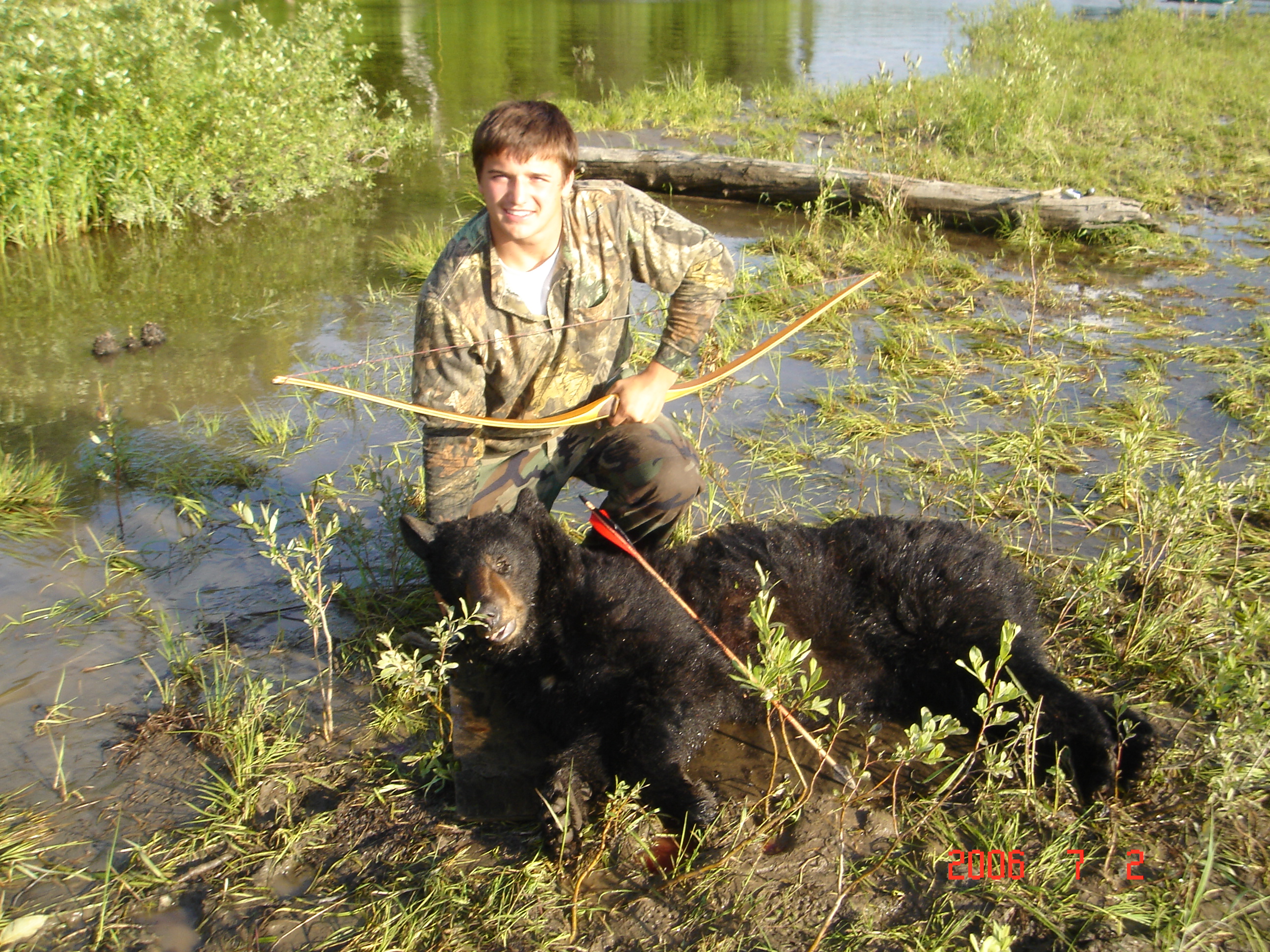
Jordan and I hiked for the next several days across the tops of the mountains searching in the valleys below for big Bull Moose. Our plan was to meet up with Jon at the adjoining trail system 5 miles deep in the backcountry on the final day of the hunt. Jon’s plan was to scout for moose on his trail system, however his ultimate goal was to harvest a black bear as a solo hunt and film crew for himself. He ended up having a successful black bear hunt, and while hunting for the bears he only saw one cow moose. Jordan and I continued to hike, counting numerous black bears and only one cow moose. We spotted 15 black bears in two days; with only one moose spotted we began to think something has happened to the moose population in the Kenai Peninsula. In the past several years our family has harvested 4 Bull Moose in the trail systems we had targeted. We found it strange that none of our hunting parties had spotted many moose on the hunt. Turns out the biology of the Kenai land mass area have had a significant impact from an invasive species. A certain type of moth as invaded the Kenai Peninsula consuming the moose populations high mountain forage. This forage not being available to the moose in the high mountains resulted in a mini migration to lower forage in un-huntable swamps below tree line. This meant we would have no success with moose however; each of the hunting parties all had the opportunity to harvest multiple black bears, multiple times. Harvesting three black bears during our annual family moose/combo bear hunt, would only help increase the number of moose population in the Kenai Peninsula for the years to come.
Instead of leaving with one big Bull Moose and two black bears, our hunt party left with three black bears. More important than the moose meat taken from the trip, was a successfully executed hunt plan in which all members involved were safe and happy. Our family moose hunt was unsuccessful in the harvest, however currently August is hard at work and still in the wilderness with Jason Semler searching for a bull bruin to fill the freezer. (More on Augusts hunt when he returns September 9thth.)
The family moose hunt would be the conclusion of the expedition, a very sad conclusion indeed. The ending of the expedition would be sad, as the adventure had come to an end, a result we were all not looking forward to. Ironic that our family would feel sad that the hunting was over, but extremely happy as we filled the freezer with three caribou, three black bears, and one very tasty mountain goat.
This adventure is difficult to explain in words as so many magical events happened in the wilderness that purely must be experienced first hand versus through our story. This adventure inspires me to search for more, to be wilder in a sense and to experience natures wonders first hand versus from a couch through a TV screen. So many moments from the expedition inspire me to continue my quest through Mother Nature. For instance I found a baby grizzly bear skull on the Arctic slope while hunting barren ground caribou. Another moment on the sheep hunt, when the grizzly and her cub almost turned me and my crew into a meal, even though scary was un-forgettable. Almost losing a finger 30 minutes into the goat hunt and still managing to harvest a trophy would only add to the story and to my personal character. The ability to spend time with loved ones in nature only improved the experience of the expedition. I share these memories of my family and of team missionak, not only to preserve the story forever but also to inspire those across the globe to make their own story. Our mission is to manifest our own destiny, we are the controllers of our future and only more adventures are in store. Manifest your own destiny and share your adventures. The adventures are out there, are you?
Be sure to check back on missionak.com as the other members of Mission AK tell their unique sides of the Expedition. More from Jon and Auggie to come stay tuned and check back for more missionak action!
Auggie is on his way back from a moose hunt, and I only have great feelings about his news. Hopefully he harvested a monster bull with Jason. Best of luck men!
-Austin