Guess Where.

alaska, alaska hunting expedition, archery hunting, arrows, bow and arrows, Camera, DIY hunting, Field Producer, Go-Pro, Hunting with Camera, National Geographic, public land, Survival, traditional archery, Ultimate Survival Alaska, Videographer

Guess where this shot was taken….Ill give you a hint, it was during the filming of Ultimate Survival Alaska.

Rob and Austin

Rob and Austin

The picture is of Robert Seamen a shooter/producer and I.  Rob is one of the hardest working individuals I have ever met in my life.  This guy was very talented with his camera to say the least, he managed to keep rolling footage in the wet and inhospitable Alaskan weather.

Nunivak Island Pictures

alaska hunting expedition, antler hunting, archery hunting, arrows, Bering Sea, bow and arrows, Camera, DIY hunting, extreme hunting, hunting, Hunting Culture, Hunting with Camera, meat, moose, National Geographic, nature, public land, small game, Small game hunting, Survival, The next generation, traditional archery, Ultimate Survival Alaska, unguided hunting, wildlife

Here are some pictures from the latest USA episode.  Enjoy!

My new friend on the Bering Sea

My new friend on the Bering Sea

Director of Photography Brent Meske "The Man"

Director of Photography Brent Meske “The Man”

Who took my hat and arrows?

Who took my hat and arrows?

"Tarping on the Bering Sea"

“Tarping on the Bering Sea”

Nunivak Island Hunting and Gathering: New Ultimate Survival Alaska Airs Tonight June 16th at 9PM ET

alaska, alaska hunting expedition, antler, archery hunting, arrows, bow and arrows, camping, DIY hunting, extreme hunting, hunting, Hunting Culture, Hunting with Camera, meat, National Geographic, public land, small game, Small game hunting, Survival, The next generation, traditional archery, Ultimate Survival Alaska, unguided hunting, wildlife

Nunivak Island Hunting and Gathering: New Ultimate Survival Alaska Airs Tonight June 16th at 9PM ET

Well its safe to say that my longbow was used throughout tonights episode.   The eight of us land on Nunivak Island in hopes of providing some much needed protein for our nutrition.  Hunting on Nunivak Island has been part of their culture for thousands of years.   Very cool place to visit and the people of Mekoryuk were extremely friendly and most helpful.  Be sure to catch the new episode tonight for the how to on hunting with a longbow.   Humans have been on a mission to put protein in the pot for thousands of years….What’s your mission?

Photo Courtesy of National Geographic

Photo Courtesy of National Geographic

Thanks again to everyone in Mekoryuk, you made this leg of the adventure my personal favorite!  Don’t forget to tune in tonight at June 16th at 9PM ET.  For behind the scenes look at Ultimate Survival Alaska check out the twitter updates and facebook posts, find us on twitter @MissionAlaska, and @austinmanelick, #ultimatesurvivalalaska.

-Austin Manelick

Brookes Range – Gates of the Arctic – “The Arrigetch”

alaska, alaska hunting expedition, antler hunting, archery hunting, artic slope, bears, big game hunting, bow and arrows, Camera, camping, DIY hunting, extreme hunting, grizzly bear, guns, hunting, Hunting Culture, National Geographic, Ultimate Survival Alaska, Uncategorized

Brookes Mountain Range – Gates of the Arctic – “The Arrigetch” – Bob Marshall

Need I say more? The names mentioned above are legendary, well-respected, and admired in the Alpinist world of exploration. The Gates of the Arctic are truly wild; nestled among some of the gnarliest mountains Alaska has to offer. To begin above the Arctic Circle and end in South West Alaska with nothing but the gear on your back is a daunting task. The challenge set forth by Nat Geo was to embark on this expedition in an “old-school” style, i.e. no fancy technology. This expedition was a throwback to the early days of Alaskan exploration; a journey that traces the pages of history and an ode to the past explorers who came to Alaska and explored the last frontier with minimal gear and technology.

Bob Marshall was an Alaskan explorer who came to the state after exploring a large portion of lower North America. Bob said it best, “I like it among these rugged mountains better than anywhere else in the world.” I relate to the past explorers who came to this state in search of the majestic beasts that roam this fabled land. Traditional archery hunters such as Doctor Arthur Young and Fred Bear will forever be my heroes. Their accomplishments inspired me to follow their footsteps and live and adventurous lifestyle. For the first leg of the expedition the “Elite 8,” which consisted of survivalists, outdoorsmen, climbers, skiers, dog mushers, and mountaineers, began the journey in the Brookes Range. The Nat Geo expedition was the third time I have made my way into the Brookes Range. All three experiences within this epic mountain range were very different, but equally unforgettable.

My first trip to the Brookes Range was several years ago. My brother August and I flew out to hunt dall sheep. The time spent in the north-eastern part of the Brookes was so incredible and also humbling. I cherish the moments my brother and I spent together in field chasing white ghosts with golden horns. We had a close call with a gnarly feature on one particular mountain top. The terrain taught us valuable lessons in survival…always bring rope with you…at some point you will need it. We ended up rappelling off 50-100 foot cliff faces until we ran out of rope. We were faced with a real moment of survival, we had to adapt or die. We ended up climbing down the last 1000 feet in reverse 4-wheel drive with automatic death to the right and instant death to the left. You can read all the survival guides in the world but unless you go outside and experience them first hand, it’s all for nothing.

DSC02516 DSC02538 DSC02586 DSC02582

The wilderness puts an individual’s ability to cope with their surroundings to the test. It was during hunting adventures like these that my brother and I learned to understand each other’s strengths and weaknesses. Our goal always being to turn our weaknesses into strengths. Together we learned new ways to solve simple problems. These experiences inspired my survival mantra; “team work makes the dream work.” I was much more prepared for my second and third trip to the Brookes Range.

On my second trip to the Brookes Range, my brother, John Dykes (college rugby buddy), and I set out on a quest called the “Mission Expedition”. This expedition took us from the Acrtic sea above the Brookes Range all the way to the Kenai Peninsula, and several locations in the interior. The mission of this expedition was an attempt to fill the freezer with beautiful, free ranging, no hormonal, wild game meat. Being an Alaskan resident we have the unique opportunity to hunt for the big five game animals that call Alaska home. Hunting these animals every year is a part of our Alaskan culture, not to mention the incredible taste and gratification recieved by filling your freezer on your own terms. This second trip would prove invaluable as I learned the terrain, topography, and easiest methods of travel in the Brookes Range the key being the waterways.

My past experiences in the Brookes Range taught me many valuable lessons to take with on the Ultimate Survival Alaska Expedition with National Geographic. I learned mainly that waterways are your friend, and to follow this path of least resistance. Using rafts to minimize the distance of our caribou pack out on a previous expedition, I understood the advantage of bringing along a pack raft. Bringing along a raft would at least provide us the ability to forge and cross rivers, if not to float the entire river to the landing zone. Being as this was a team mission, having a solo packraft would only let me float to the LZ and leave my partners behind. Understanding their need for river crossings help, I stuck with the mantra of “team work being dreamwork” and stayed with the group to help them forge rivers. That being said, I look forward to future adventures with my team members and would do this leg of the expedition all over again.

Check out the gear list below, with these essential items and a basic knowledge of how to use them an individual would be ready to survive just about anything.

Survival Guide Gear List:

-Magnesium Fire Starter

-Knife -full tang

– Fishing kit: Line with various hooks and spinners.

-Tarp 8×10

-Pack Raft

-Back pack or external pack frame

-Water Bottle or container

-Longbow, rifle, pistol, self defense weapon

-Sleeping bag -0 rating

-Bivy Sack

-Plenty of socks

-Food (coffee, oatmeal, rice, beans, whiskey, ramen noodles) what ever you can carry. If you can pack as much calorie dense food as possible.

Facts Courtesy of Wikipedia: Gates of the Arctic National Park and Preserve

Gates of the Arctic National Park and Preserve is a U.S. National Park in Alaska. It is the northernmost national park in the U.S. (the entirety of the park lies north of the Arctic Circle) and the second largest at 13,238 miles (34,287 km²), about the same size as Switzerland. The park consists primarily of portions of the Brooks Range of mountains. It was first protected as a U.S. National Monument on December 1, 1978, before becoming a national park and preserve two years later in 1980 upon passage of the Alaska National Interest Lands Conservation Act. A large part of the park is protected in the Gates of the Arctic Wilderness which covers 7,167,192 acres (2,900,460 ha).[3] The wilderness area adjoins the Noatak Wilderness Area and together they form the largest contiguous wilderness in the United States.

History Courtesy of Wikipedia:

Nomadic peoples have inhabited the Brooks Range for as many as 12,500 years, living mainly on caribou and other wildlife. The Mesa site at Iteriak Creek has yielded evidence of occupation between 11,500 and 10,300 years before the present. Later sites from around 6,000 years before present have yielded projectile points, stone knives and net sinkers. The Arctic small tool tradition (ASTt) of about 4,500 BP has also been documented.A late phase of the ASTt from between 2500 and 950 BP, the Ipuitak phase, has been documented in the park at the Bateman Site at Itkillik Lake.[10]

The earliest Inupiat people appeared about 1200 AD at the coast and spread to the Brooks Range, becoming the Nunamuit.[10] The Nunamiut people existed essentially unchanged until World War II brought outsiders into Alaska, which was at the time a strategic outpost of the United States. Some of the nomads began to settle in small communities in the mountains, particularly at Anaktuvuk Pass.[11] TheGwich’in people, a Northern Athabaskan group also lived in the area in the last 1000 years, moving south of the park in historic times.[10]

The Alaskan interior was not explored until the late 19th century, shortly before discovery of gold in the Klondike brought prospectors to Alaska. Some encampments of explorers and survey parties have been identified in the park. A few small mining operations were established in the early 20th century, never amounting to much.[10]

The park’s name dates to 1929, when wilderness activist Bob Marshall, exploring the North Fork of the Koyukuk River, encountered a pair of mountains (Frigid Crags and Boreal Mountain), one on each side of the river. He christened this portal the “Gates of the Arctic.” Marshall spent time in Wiseman during the early 1930s, publishing an account of the place in his 1933 book Arctic Village. In the 1940s writer and researcher Olaus Murie proposed that Alaskan lands be preserved.[12]

Proposals for a national park in the Brooks Range first emerged in the 1960s, and in 1968 a National Park Service survey team recommended the establishment of a 4,100,000-are (41,000 ha) park in the area.[11] That year, Secretary of the Interior Stewart Udall recommended to President Lyndon B. Johnson that Johnson use the Antiquities Act to proclaim a national monument in the Brooks Range and other Alaskan locations, but Johnson declined. By the 1970s the Alaska Native Claims Settlement Act (ANCSA) prompted serious examination of the disposition of lands held by the federal government. A series of bills were proposed to deal with the settlements required by ANCSA, but the Alaska National Interest Lands Conservation Act (ANILCA) was held up in Congress in the late 1970s. President Jimmy Carter used the Antiquities Act to proclaim the proposed parklands under ANILCA as national monuments, proclaiming Gates of the Arctic National Monument on December 1, 1978. In 1980 Congress passed ANILCA, establishing the monument lands as Gates of the Arctic National Park and Preserve on December 2, 1980.[12]

http://en.wikipedia.org/wiki/Gates_of_the_Arctic_National_Park_and_Preserve

Find the Gates of the Arctic on facebook @

https://www.facebook.com/GatesOfTheArcticNPS

20130518-124306.jpg

20130518-124349.jpg

20130518-124454.jpg

20130518-124552.jpg

20130518-170108.jpg

20130518-171055.jpg

20130518-171303.jpg

Hunting Whitetails: Part Two 2012

alaska, archery hunting, Camera, DIY hunting, Pennsylvania hunting, public land, Rifles, Whitetail hunting

Hunting mature whitetail deer is one of the most challenging hunts in the entire world.  You must spend time outsmarting an animal that has developed keen senses to avoid detection by the worlds smartest predators.   Growing up hunting Alaskan big game animals is completely different than hunting backyard whitetails.  Both so challenging is so many different ways.   It’s safe to say that I have had many whitetails in the woods teaching me my lessons and waving me to go back to Alaska with their alerted tails held high.  Hunting this species and taking several proud specimens, I must say that I am a whitetail addict.  Every year I will be hunting these beautiful creatures and sharing with you all the tricks that I have learned along the way.  This is no “pro-staff” mumbo jumbo… No guff, just an Alaskan guy sharing the techniques I have developed to put venison in the freezer.

After putting out one trail camera in a heavily used deer crossing I found out that several bucks have been frequenting my potential opening morning hunting spot.  Catching several legal bucks coming to their feeding area to their bedding area, I know exactly where I will be putting my tree stand.

Directions for the tree stand

Purchasing the stand and putting the contraption together was a different battle, as there were no real directions only a diagram and a picture to follow.

Another legal buck coming through the area.  This guy is on the harvest list…

Putting together this contraption called a two man tree stand.

Hanging the tree stand at the selected tree based on the trail camera scouting report.

Stay tuned for part three of the annual Pennsylvania whitetail hunting adventure.  Opening day starts the 26th of November and it should be a blast!

Legendary Archer: Arthur Young World Champion Archer Takes on Alaskan Expedition. Video

alaska, alaska hunting expedition, archery hunting, arrows, bears, big game hunting, bow and arrows, caribou, grizzly bear, hunting, Hunting with Camera, meat, moose, public land, traditional archery, trout, Trout fishing

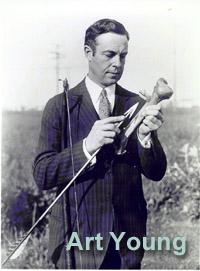
This is possibly the coolest youtube video I have ever viewed.  This video shows world champion archer Arthur Young on an epic expedition across the state of Alaska subsisting with only a traditional longbow and arrow.  He takes on dall sheep, moose, brown bear, small game, salmon, and basically everything in between.  Arthur shoots a moose with his longbow, then uses its hide to build a canoe and float down the freezing Yukon River.  He spends times hunting with the Alaskan Natives on the his way to hunt brown bears in Kodiak.  This black and white video is awesome, watch legendary bowmen Art Young take on Alaska “old school” with only stick and string.

Image Courtesy of http://www.stickbow.com/stickbow/history/ArtYoung.html

Check these links out if your interested.

Alaska Archery and Small Game Hunting

alaska, archery hunting, arrows, bow and arrows, hunting

Today Vince Pokryfki and I took to the woods with our longbows in hand. Getting out to stretch our legs and loose a few arrows turned into a fun filled adventure. Riding Vinces four wheeler above tree line and into the mountains was an easy enough task. Upon reaching our mountain top vantage point we were granted spectacular views of the Matnuska Valley basin set between the Talkeetna and Chugach mountain ranges. With small game and exercise set as our main objective, we started walking through the thickest cover we could find. Small game season consists mainly of grouse, rabbit, and squirrel.

After an hour or so of walking and enjoying our time of solitude, I spotted movement coming from under a spruce tree. The movement coming from a perfectly camoflague grouse, silhouetted against a snowy backdrop the quarry seemed uneasy.
As I circled the tree the bird began to move forward in preparation for flight. I pulled the bow back reaching for my anchor point. As soon as my middle finger touched the corner of my mouth the arrow was off with deadly intention. Striking the birds head, the shot was instantly fatal. The day was a success and once again I thoroughly enjoyed the time spent in the woods.
Check out the pictures taken today during the hunt, archery is fun and I suggest you try it.

20121106-181916.jpg

20121106-181939.jpg

20121106-182036.jpg

20121106-182138.jpg

20121106-182232.jpg

Spring Bear Hunt 2012: The First Leg with Vince P

alaska, alaska hunting expedition, archery hunting, big game hunting, bow and arrows, camping, caribou, DIY hunting, grizzly bear, grizzly brown bear, Hunting with Camera, moose, public land, traditional archery

Alaska Spring Bears 2012

Alaskan adventures if survived, tend to leave individuals smarter than when they embarked.  That being said, the Alaskan learning curve is basically vertical, and surviving means adapting and learning very quickly.  Do it yourself adventures bring a whole new challenge and dimension to any hunt.  This year’s DIY spring Alaskan bear hunt proved just how difficult, yet rewarding these self-planned adventures can be.  The mission of this three-leg journey was to successfully harvest a black bear, a brown bear, or both.

Brown Bear

The first leg of the three part adventure across South Central Alaska was with fellow Sourdough (Alaska resident) Vince Pokryfki.   Vince and I headed north of Talkeetna, Alaska in his riverboat. We worked our way up a network of connected rivers to our destination; Game Management Unit 16A-16B.   Our objective was to thin out several bears from his moose hunting area. This would allow more moose fawns to live, meaning more trophy bull moose to chase in the fall.  For this hunt, Vince wanted to settle the score on his terms. Vince was equipped with his custom “Dan Ryan” primitive bamboo-back osage long bow and self-made port orford shafts and double bladed Eskimo Zwickey 125 grain broad heads.   Vince then proceeded to hook me up with 6 home made Grizzly Stick shafted arrows with Zwickey double bladed Death Wish broad heads.   I accompanied Vince with my own home-made longbow to settle the terms of our claw-to-stick fight.

Vince and Austin with flannels and bows

I named my home-made long bow “Hybex.” This bow was made back in my high school days in collaboration with Vince Pokryfki and Bowyer(bow maker) Dan Ryan.  I also brought my trusty 416 iron sighted Remington Magnum, a gun my Dad used back in his registered Alaskan guide career.   This massive caliber could do the trick if necessary to back Vince up if anything were to go wrong.   I kept the 416 shouldered across my back as means of back up.  All members including the videographer, were packing heat.  Vince also had a 454 Cassull on his hip, and I had a chest holster equipped with a 44 Magnum.  It’s safe to say that we had one small arsenal of weaponry that we planned to employ if necessary.

Vince P Moose Hunting Picture

The reason we came so heavily prepared was due to the fact that Vince has much experience with the wildlife in that area.  Vince has taken many moose via longbow in this area over the years.  Most of these years he has came back the following morning to find brown bears on the moose carcass.  Not only have his hunting grounds been invaded, his fishing grounds have as well.  Last fall a bear charged Vince at his secret fishing hole in broad daylight.   In Alaska you have to learn to co-exist with wildlife in their habitat.  Vince has learned to do just this; he fishes during broad daylight hours and leaves mornings and evenings alone to let the bears have their turn at the fishing hole.  The charge occurred during a blue bird sunny afternoon.  Vince has never hunted brown bears until now. This is interesting because he has had the opportunity to take many bears in the past.   He has made the decision to finally hunt bears because.  He has over 20 years experience with not just the bears, but all of the wildlife in this area.  He takes family members to these areas, and he wants to make sure they are safe.  I want to help Vince in this area and do our part in bear management.  Taking our quota of bears in the big picture is minimal.  However, hunters such as Vince and I can make a difference in the population of a particular area.  Collective groups of hunters need to be successful in many regions across a GMU to make an effective difference on animal population.

Vince caught this “Chromer” salmon at his secret fishing hole.

In essence, Vince and I are attempting to do our part.  The adventure for this journey began at Fred Meyers, to get our hunting tags/licenses and secondly to get food for the trip.  We gathered our favorites, including Oreos and granola bars and off to the boat launch we went.  We got to the boat launch that Vince described as an “Alaskan boat launch.”  We arrived on a steep gravel road access to a boulder farm style riverbank.  The closer we got to the river, the worse the launch looked.   Vince was confident the whole time, I followed suite and was excited to finally start this bear hunt from the riverboat. Vince expertly flung the boat in the water as I held the rope tied to the front of the boat.  The boat swung to the side of the rocky riverbank, Vince parked the truck and we both jumped in and fired up the Evinrude.   There were a few moments of silence as Captain Vince pushed the throttle forward and threw that baby on step.  We were cruising up river and hunting bears in no time.

Boat in action, on step and moving up river.

At any given point you can see game animals or bears in Alaska and we were prepared.  We cruised up river to the point of attack, where last year Vince was charged by an aggressive bear.  We found a suitable flat spot where Vince has made moose hunting camps in the past and set up our camping site.   The tent and kitchen were up and running real quick.   After camp duties were taken care of, we grabbed our bows and off we went.  During spring time, bears are not usually concentrated to food sources such as salmon streams or berry patches. Bears can roam up to 50 miles per day in search of food.   Coming across one of these post hibernating bears is basically the combination of perfect timing and a great location.   Vince and I did not hunt over a bait station, but hunted via spot-and-stalk.

River beaches and endless miles to stalk.

We walked what seemed like endless miles of braided out river until we stopped to glass for meandering bears walking the river beaches.  We found many black and brown bear tracks, however we hadn’t spotted the owners of the tracks.  After two days of walking the river beaches with no luck, the game plan had to change.  Instead of walking the rivers silently, we cruised the river and searched for bears from the boat.  Not a bad game plan, the only down side would be the noise from the boat’s engine.   This noise would alert any predators of the dangers that our longbows poised.  Our bows would be rendered useless at this stage, as the element of surprise had flown out the back of the boat.  On the third and final day, I switched from my longbow to the iron sighted back up rifle.

Austin carrying Bridger across the creek. Team work is dream work.

With the new game plan in mind for the final day of the adventure, we ambled on up-river.  If a bear showed himself, we would have to park the boat, bail out of it and set up on the river-bank for a long shot.  Hopefully a bear would be tolerable of our presence and stand just long enough for an iron sighted shot.  Extending the distance of my “smoke bow” fumed new excitement into the air. A close encounter was long overdue.

Austin and Bridger near the boat landing ready for the stalk.

“Hey Vince, is that a boulder bear?”  I asked, thinking I had been fooled by a dark colored rock.  The rock started to move… “BEAR, BEAR, BEAR!” I whisper yelled to Vince.  He immediately steered the boat towards the rocky riverbank, and in a moments notice I flew out of the boat like I was storming the beaches of Normandy.   The videographer (Bridger VanNess) was in close pursuit and I sprinted along the rocky beach to an abstruse log, an excellent shooting bench.   The large sized black bear was around 170 yards away and was moving up a large embankment towards a thick, endless grove of crisscrossed spruce and alder trees.   The bear paused for a moment.  I aimed the front pin of the iron sited 416 Rem Mag toward the bear; covering much surface area of the black dot.  The black dot stopped near the top of the alder choked hill, I took a breath and slowly pulled the trigger doing my best to steady the steel bead.   “BUHHHDOOOOOM” said the 416 Rem Mag.  The bear paused another second looking stunned before bolting deep into the “peanut butter” like alders.

Vince backing me up with his custom long bow.

The bear looking unfazed by the 250 grained bullet, I didn’t feel confident with the shot and felt it was a 100% miss.  Although I wasn’t confident with my shot, I wanted to be the ethical sportsman and check the surrounding area for signs of a wounded animal.  After a short boat ride and a three-minute hike, I found myself standing in the bear’s footsteps.  After circling the area multiple times and conducting a thorough investigation for any signs of a wounded animal, Vince and I concluded the bullet never found its mark.   The bear was safe, however the bear learned to fear humans now more than ever.  I was extremely bummed, as any hunter would be, feeling like I let myself down as well as my hunting partner.  Missing an animal is a hard feeling to describe, only a hunter who has been there and done that can know the feeling.  A clean miss is better than a wounded bear, and any hunter who hasn’t missed hasn’t been in the woods long enough.   Knowing the animal was not wounded helped relieve the large burden I was carrying.  It was now the last day of the hunt and our focus turned to taking down camp and preparing the boat for our departure.

Tent and campsite.

Just before leaving, Vince and I took a few moments to reflect on the trip.   Even though there was no kill during this trip, Vince and I still had positive morale in the special memories we both made on that trip.   Hunting with an iron sighted rifle is difficult, and hunting with long bows is even more difficult.  Vince and I both believe that the kill of an animal is the physical representation of the memories made on a hunting trip.  However, in no way does the kill of an animal represent the endless laughs and fun times Vince and I spent together.   To say the very least, Vince, myself, and Bridger had an awesome time together. We made memories that will last a lifetime.  I want to personally thank Vince for taking several days away from his family and work to take me on an unforgettable journey.   I will never forget the delicious camp food, the authentic Alaskan stories, the real life facts, and the camaraderie that Vince shared with me.   I already asked Vince when our next hunting adventure would be. He said he is always game to go play in Alaska.

Coffee and laughs with Denali

With seven days left of my spring bear hunt, I set my sites to a new hunting area.  I drove eight hours to Valdez, stopping only at my home base in Palmer to exchange rifles.   I needed to switch from the iron sighted 416 to the 350 Remington Magnum with a 4-14x Leupold scope.   Now we were off to Valdez in search of beach combing monster black bears.   I had spoken with several locals in the area who all said “bears are literally everywhere down here, some of them live in the streets.”   With a scoped rifle to extend my shooting range, a new excitement came over me.  Venturing to Valdez was the second leg of this three-part journey….

Boat ready for launch.

…..Stay tuned for the rest of this three part spring bear hunting adventure….

Spring Bear Hunting Alaska 2012

alaska, alaska hunting expedition, antler, antler hunting, archery hunting, arrows, bear charge, bear maul, bears, big game hunting, bow and arrows, camping, DIY hunting, extreme hunting, grizzly bear, grizzly brown bear, hunting, Hunting Culture, meat, nature, public land, Rifles, shed hunting, The next generation

Image

This picture is from August’s and my 2009 spring bear brother hunt.  August and I, (as well as videographer Jon D) took to the spring hunt as if it was our last.  We hunted six hard days, deep in the Alaska wilderness and managed to harvest this beautiful black bruin on film.  Bears taste better during the spring, as they have yet to change their diets to the salmon runs of summer through fall.  August and I would eat plentifully off of bear backstrap after this harvest as we were nearing the end of our food supplies.

Image

This is a photo of me cutting bear back strap (in preparation of our beast feast over open flame) on a moose antler found during this 2009 spring bear hunt

I’ll be partaking in the traditional Alaska spring bear hunt again during this 2012 season.  To some hunters in Alaska, bear hunting is part of their culture.  I am proud to say that this tradition of spring bear hunting in Alaska has shaped my culture and parts of who I am as an Alaskan.  Every year since the sixth grade (12 years ago), I have been gifted  the ability to hunt bears in Alaska.  This is a blessing to be apart of such an awesome outdoor culture.

Hopefully after this spring I will be able to secure valuable bear meat to add to my 2012 collection of wild game fare.  I can see it now……Smokey bear jerky….. Bear stew…..Bacon wrapped bear sizzled on the grill w/ avacado….   You get my drift…

I can’t wait to head to the field.

-Austin Manelick

Trophy Bull VS. Meat Bull

alaska, alaska hunting expedition, antler, antler hunting, archery hunting, arrows, artic slope, bow and arrows, camping, DIY hunting, extreme hunting, guns, hunting, Hunting Culture, meat, moose, Rifles, The next generation, traditional archery, Uncategorized, unguided hunting, wildlife

Hunting to many Alaskas means red meat for the freezer, enough meat to get a family through the winter.  Across Alaska many residents practice the art handed down by our ancestors and the cave men before that, the not-so lost art form called subsistence hunting.  Each Fall locals from around the state leave the comfort of there homes and thrust themselves into the wild attempting to fill the freezer against all odds.

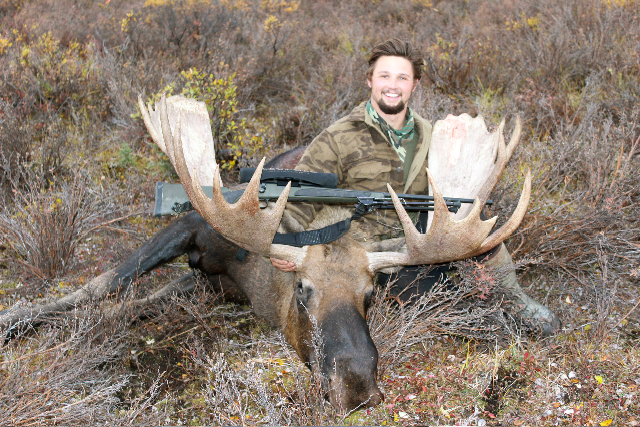
2009 Moose Harvest

When your an Alaskan and attempting to fill your freezer, any animal deemed by ADFG (Alaska Department of Fish and Game)as legal under the states rules and regulations most likely will be harvested.  As Alaskan subsistence hunter August Manelick would say “a legal spike for moose will taste just as good if not better than a trophy moose.”  I agree with August in that the goal of hunting is first and foremost to be legal and secondly to fill your freezer.  All though most hunters (including August and myself) will agree that a 55 inch trophy bull moose would look better on the wall and in the freezer than a spike fork (small legal yearling bull moose) would.

Image

The goal of hunting is to fill your freezer and provide sustenance for the long winter months.  Taking a trophy animal is a bonus, providing in a sense two trophies the meat and the antlers.  The meat of an animal is the true trophy, don’t let anyone tell you different.  The hunt is about the experience, camaraderie, and the stories shared with loved ones post hunt.  The harvest of the hunt is a physical representation of the memories made while in the field, regardless of the animals antler size.  Any legal animal is a gift, take your blessings and eat plentifully through out the following year.

Auggie with a double trophy, meat and antler.

Auggie with a double trophy, meat and antler.

Bottom line, there is a big difference between trophy hunting and subsistence hunting.  Trophy hunting individuals hunt usually for just the size of the antlers, bigger is always better.  Subsistence hunters hunt for the meat value of an animal.  Two very different ball games, playing by the same rules.